ISO Consultants in the UAE: How to Get It Right
Wiki Article
What's An Iso Consultant From The UAE Actually Do?
The term 'ISO consultant' can be used to describe a consultant in the UAE market, and businesses who are attempting to get certification for the first time are frequently unsure exactly what they're buying when they choose to engage one. Knowing the full scope of the job helps establish reasonable expectations and makes it simpler to determine whether a consultant will provide real value.Translating the Standard Into Practical Business Terms
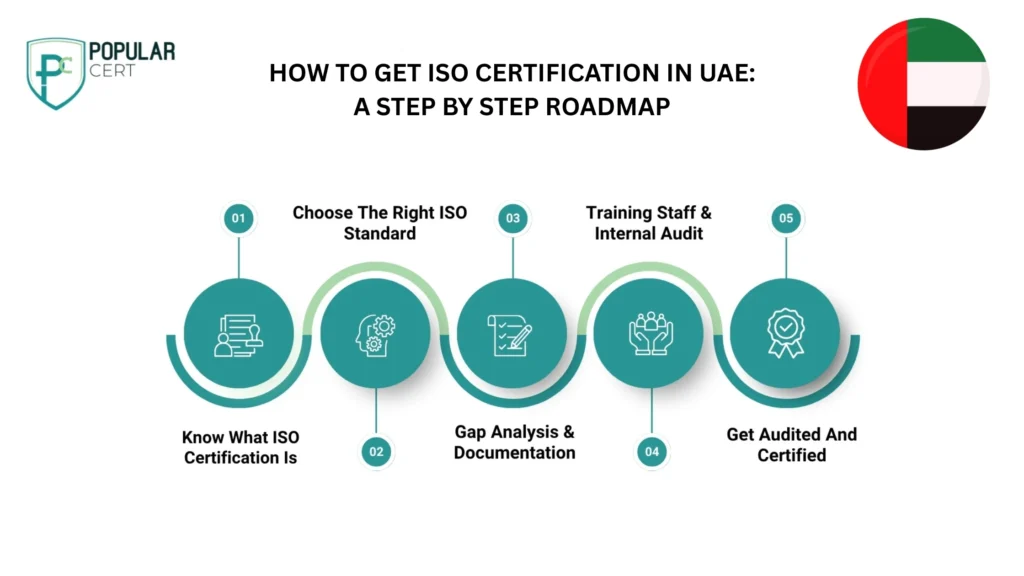
ISO specifications are written a formal, generalised language designed for use across a variety of different industries. This means that a significant portion of the consultant's work is translating those standards into what they actually mean for specific businesses' day-to-day processes. A good consultant invests exploring how a particular business actually operates before suggesting ways their existing processes will fit the requirements of the standard.
Participating in the Initial Gap Assessment
Most tasks begin with a formal gap assessment, whereby we compare current practices against the relevant guidelines to establish what is already in place, what has to be modified, and the ones that are not being addressed. This assessment is the basis for the timeline for implementation and budget, and that's why an accurate authentic gap assessment is required more than an optimistic one that understates how much work is involved.
Supporting the Construction or Refinement of Management System Documentation
When gaps are discovered, consultants are usually able to help create or improve the procedures, policies and documents needed in order to demonstrate compliance. current standards emphasize genuine compliance with processes over the volume of paperwork. The best consultants are those who fight against overly detailed documentation for the sake of it preferring a system that the company will actually use over ones designed to simply satisfy an auditor's list.
Training staff on new or revised processes
Implementation isn't just an executive-level exercise because staff at all levels typically have to comprehend what's happening in their daily work routines and the reason for it. Consultants often hold workshops to help build this understanding, as a management system that only exists in paper but doesn't have real buy-in tends to unravel quickly when the initial pressure for certification has passed.
Conducting Internal Audits in advance of the Actual Thing
Most standards require at a minimum one internal audit before an external certification audits take place and consultants usually perform this themselves or train internal employees to do it. Internal audits are a real dry run finding issues in the midst of time to address them rather then identifying the issue for the first time before an external auditor.
Facilitating the Business with the External Audit
Though consultants usually aren't present and acting on behalf of the company's behalf during conducting the certification inspection, due to the requirement for independence the business, good consultants should prepare well ahead of time and are generally readily available to help interpret and address any irregularities an external auditor finds.
What a Consultant Should Not Be Doing
A reputable and competent consultant should not be the only entity which issues the certificate in its own right, since it undermines credibility that the whole system is built on. Any consultant who offers to create your management system and certify it under the same roof is an actual danger to be viewed with caution rather than being a shortcut.
Assistance in Interpreting Standard Revisions and Updates
ISO standards are often revised in accordance with the latest revisions, and a reliable consultant keeps customers informed of future changes long before they become mandatory, allowing the business time to prepare instead of having to scramble at final minute. The advisory role that consultants play often continues long after an initial certification project specifically for businesses that retain a consultant for a smaller, ongoing basis to provide surveillance audit assistance.
The Business Approach: Adapting to Size
A reputable consultant will scale their approach according to whether they're working with a 5 person startup or a 5-hundred-person enterprise, as a management system genuinely proportionate to business size and complexity is more likely of being maintained well than one that's based upon the needs of a bigger company. Beware of a one-size-fits-all template that is being used regardless of your business's actual size.
In building internal capacity, not Dependency
The best consultants want to be able to leave a firm more self-sufficient than when they started, training internal staff to eventually manage the system in their own way, not creating an ongoing dependency solely for their own ongoing billing. Asking a prospective consultant directly what they do to improve their internal capacity construction is a decent test to determine if they're truly focused on long-term client success.
An attainable timeframe for engaging A Consultant
Companies often don't realize how early in the certification process consultants should begin, often consulting only when the deadline for engagement is nearing. Engaging a consultant at a time that is sufficient to conduct a true gap analysis, instead of hurrying implementation under pressure to meet deadlines creates a more solid, more sustainable management system than a short, time-bound engagement.
Recognizing When You've Outgrown the need for a professional
Certain UAE companies, especially the larger ones that have dedicated compliance or quality personnel can eventually get to a point where they can handle ongoing surveillance audits and even standard transitions largely in-house, engaging a consultant only for occasional professional input. The recognition of this change instead of having to hire a full consultancy support forever, represents an evolving management process that has genuinely become part of the way in which businesses operate.
Correctly understood, a great ISO Consultant in the UAE acts less like the role of a document vendor and more of an adjunct to an executive team, who can guide an organization through a real operational shift, rather than creating documents to meet some external requirement. Choosing the right consultant, as well as knowing their role should and shouldn't include, can mean the difference between a certification initiative that really improves how a business operates and one that issues a certificate with any significant operational changes behind it. The fact that this is the case doesn't mean the job of a consultant less important, but it's a good idea to be able to view the relationship as genuine partnership, rather than outsource the entire responsibility of certification to a third party. This mental shift alone can be expected to result in a more durable and long-lasting certification result. If approached in this manner, the involvement becomes a true investment rather than simply another cost of compliance. This is an important distinction worth taking note of throughout. Read the best ISO 9001 Certification for blog advice.
ISO 9001 Explained: Quality Management for UAE Companies
ISO 9001 remains the most recognized management system standard globally, in good reason. it's built around a genuinely real-world concept that says that the best quality results from consistently managed processes, not good intentions on their own. For UAE businesses that are looking to get certified, knowing what the standard will help you understand an idea that can seem more complex than it is.What ISO 9001 Is Actually Based On
The premise behind ISO 9001 is that ISO 9001 asks a business to identify its primary processes in order to comprehend how they interact and how they interact, evaluate whether they're running, and then make changes by systematically improving them in time. Instead of setting out the specific ways the business should be run it offers a structure for ensuring that every approach an organization adopts remains consistent. It also provides documentation when necessary, and is actually followed.
The reason UAE Businesses Choose It?
Beyond its reputational benefit of the certification, many UAE firms are seeking ISO 9001 because government and public sector tenders have begun to include it as an eligibility requirement for prequalification. Beyond the fact that it is a requirement firms that have the procedure correctly can reap tangible benefits to their operations, like less repeat mistakes, better accountability as well as a more systematic procedure for handling complaints from customers.
The role of top Management
One area where the standard is specifically clear on is leadership involvement, not quality management being entrusted to the compliance manager, which is completely detached from actual decisions. Auditors particularly look for evidence that senior leaders understand and actively participates in the quality management system rather than just approving on it.
Risk-based thinking is the core of the Modern Standard
The current version ISO 9001 places considerable emphasis on identifying risk and opportunity applicable to a specific business context, and not relying on the standard checklist regardless of the circumstances. This means that a UAE construction firm and a UAE software company, despite being both certifying against the same standard but will come up with very different quality systems showing their distinct risk profiles.
Customer Focus Flows Through the Standard
ISO 9001 repeatedly returns to the notion that quality is about meeting customer demands in terms of expectations and requirements, not just internal efficiency indicators. Businesses implementing the standard are required to implement a system for understanding what customers actually require and whether or not they're satisfied, rather than assuming internal quality control alone is able to capture the whole picture.
Its Certification Process Itself
After implementing the necessary processes and documentation, certification involves an external inspection that occurs in two stages. First, it is a review of preparation and documentation, and finally checking if the system is actually operating as it is described. Certification is followed up by annual surveillance audits, and finally a complete certification audit approximately every three to ensure the system's ongoing compliance.
Common Misconceptions worth clearing
A common misconception is ISO 9001 requires enormous volumes of paperwork, when the actual version has reduced the necessity of documentation by a significant amount compared to previous versions, and is focused on demonstrating the effectiveness of process control. Another common misconception is that certifications guarantee the product's quality directly, however actually, it is a proof that an organization has a consistently procedure for managing quality that is a different however still a valuable thing.
How It Differently Applyes Across Different Sectors
A construction company implementing ISO 9001 will focus heavily on project handover processes and managing subcontractors, whereas a professional service firm could focus more on processes for engaging clients or knowledge-management. This standard's versatility across sectors is the reason it is still relevant across such a broad range of UAE industries including manufacturing, consulting and retail.
The Importance of Continuous Improvement
ISO 9001 doesn't treat quality as a fixed goal instead, it's a continuous process of evaluating performances, finding opportunities to improve, and implementing changes systematically. Businesses that truly embrace this mindset of continuous improvement, rather than viewing certification as an event that is only once in a while, will reap some of the most important long-term operational benefits of the standard.
The importance of preparing your team in the Cultural Shift
Perhaps the most neglected aspect the process of ISO 9001 implementation is the genuine cultural shift required, switching from informal, individual-dependent methods of working towards more structured, consistent processes that don't solely rely upon a single person's memory or judgment. In preparing employees for this change and educating them on the real benefits rather than presenting it solely as an exercise in compliance significantly improves the way implementation is carried out.
Why the Investment Tends to pay off
Businesses that implement ISO 9001 thoughtfully, rather than merely an exercise to fulfill an external requirement, generally observe that the investment pays off by fewer repeat errors, increased accountability within the company, and a more solid foundation for scaling operations as the business expands. These benefits are far beyond the certification its own.
How ISO 9001 Interacts With Customer Complaints Specifically
The standard requires that businesses be able to establish a proper, organized method for handling customer complaints and feedback. They must treat each complaint as a valuable data point that can be used for improving the efficiency of the process rather than being ignored and then forgotten. UAE businesses that can build the correct feedback loop often discover that it is one of its most useful aspects of the entire management system, well beyond its role in meeting the audit requirements.
For UAE businesses evaluating whether ISO 9001 is worth pursuing in the first place, the truth usually boils down to whether the business genuinely wants more stable, well-controlled processes as the certification itself is basically a formal endorsement of the core operational discipline. For UAE enterprises that are genuinely interested in improving how they operate instead of just collecting a certificate, ISO 9001 offers a known, internationally acknowledged approach to making improvements gradual rather than haphazard. It is not necessary to abandon things that are already effective within a business, since ISO 9001 is fundamentally about the formalization and reinforcement of good practices instead of replacing it with something totally new. If it is approached this way the certification is an inevitable extension of good management, not an external burden imposed on the business. It is, in the end an instrument built on regular use of common sense instead of being a mystery. This more than anything else, is the reason it deserves serious consideration. Few other investments can provide such the broad and long-lasting benefits of operation. It is definitely worth the time you spend to do it right. See the top ISO 22000 Certification for more recommendations.